Free Shipping on Orders Over $50 | 4 Ingredients. Nothing Else.Shop Now

Brand Safety Report

CeraVe

Ingredient safety analysis based on 5 products in our database.

Safety Score

4.4/10

Products

5

Flagged Ingredients

8

CeraVe

New York, New YorkFounded 2005
Safety Score4.4/10Concerning

CeraVe was founded in 2005 and developed with dermatologists to create skincare products featuring three essential ceramides (1, 3, and 6-II) that help restore and maintain the skin's natural barrier. The brand was acquired by L'Oréal in 2017 for approximately $1.3 billion and has since exploded in popularity, largely driven by skincare influencers and dermatologist recommendations on social media. CeraVe products are widely praised for their effective, no-frills approach to skincare, but formulations include conventional ingredients like phenoxyethanol, parabens (in some products), PEG compounds, and petroleum derivatives. The brand's scientific credibility and dermatologist endorsements create strong consumer trust in its ingredient choices.

Products Analyzed

CeraVe Moisturizing Cream5/10
CeraVe AM Facial Moisturizing Lotion SPF 303/10
CeraVe PM Facial Moisturizing Lotion6/10
CeraVe Hydrating Mineral Sunscreen SPF 306/10
CeraVe Ultra-Light Moisturizing Lotion SPF 302/10

Flagged Ingredients Found

dimethicone(in 5 products)phenoxyethanol(in 5 products)homosalate(in 2 products)octinoxate(in 2 products)bht(in 2 products)petroleum petrolatumoxybenzonesynthetic fragrance
Compare with Numbrrrz

Who Owns CeraVe?

Big Corp Subsidiary

Parent Company

L'Oreal(OR.PA)

Parent Industry

Beauty & Cosmetics

Parent Revenue

Approximately $42 billion (2024)

Acquired

2017 for Approximately $1.3 billion (part of Valeant/Bausch portfolio acquisition)

Also Makes

L'Oreal ParisMaybellineLancomeNYXLa Roche-Posay

L'Oreal acquired CeraVe in 2017 as part of a deal to purchase three skincare brands from Valeant Pharmaceuticals (now Bausch Health) for approximately $1.3 billion. CeraVe sits in L'Oreal's Active Cosmetics division.

Corporate ownership does not automatically mean a product is unsafe. It means ingredient and sourcing decisions are influenced by a parent company whose primary business is beauty & cosmetics. Consumers deserve to know who profits from their purchases.

Products by CeraVe

View full ingredient analysis
CeraVe Moisturizing Cream

CeraVe Moisturizing Cream

CeraVe

Ingredients17
Flagged3
Safety Score5/10
Numbrrrz Organic Lip Balm

Numbrrrz

Organic Lip Balm

Ingredients4
Flagged0
Safety Score10/10
Shop Numbrrrz Instead
View full ingredient analysis
CeraVe AM Facial Moisturizing Lotion SPF 30

CeraVe AM Facial Moisturizing Lotion SPF 30

CeraVe

Ingredients15
Flagged5
Safety Score3/10
Numbrrrz Organic Lip Balm

Numbrrrz

Organic Lip Balm

Ingredients4
Flagged0
Safety Score10/10
Shop Numbrrrz Instead
View full ingredient analysis
CeraVe PM Facial Moisturizing Lotion

CeraVe PM Facial Moisturizing Lotion

CeraVe

Ingredients16
Flagged2
Safety Score6/10
Numbrrrz Organic Lip Balm

Numbrrrz

Organic Lip Balm

Ingredients4
Flagged0
Safety Score10/10
Shop Numbrrrz Instead
View full ingredient analysis
CeraVe Hydrating Mineral Sunscreen SPF 30

CeraVe Hydrating Mineral Sunscreen SPF 30

CeraVe

Ingredients13
Flagged2
Safety Score6/10
Numbrrrz Organic Lip Balm

Numbrrrz

Organic Lip Balm

Ingredients4
Flagged0
Safety Score10/10
Shop Numbrrrz Instead
View full ingredient analysis
CeraVe Ultra-Light Moisturizing Lotion SPF 30

CeraVe Ultra-Light Moisturizing Lotion SPF 30

CeraVe

Ingredients14
Flagged7
Safety Score2/10
Numbrrrz Organic Lip Balm

Numbrrrz

Organic Lip Balm

Ingredients4
Flagged0
Safety Score10/10
Shop Numbrrrz Instead

Get Your Free Ingredient Safety Report

Enter your email and we'll send you a personalized breakdown of the most common harmful ingredients in your daily products.

Flagged Ingredients in CeraVe Products

We found 8 different ingredients of concern across CeraVe's product line. Each one links to a full safety analysis with details on health risks, regulatory status, and which other brands use the same ingredient.

8

Oxybenzone

A chemical UV filter found in many sunscreens and SPF-containing cosmetics. It absorbs UVA and UVB radiation but is a known endocrine disruptor, coral reef toxin, and one of the most frequently detected chemicals in human blood and urine.

In 1 of 5 CeraVe products30
Hormone Disruptor
7

Petroleum / Petrolatum

A semi-solid mixture of hydrocarbons derived from petroleum refining. Widely used as a moisture barrier in lip balms, lotions, and ointments. When inadequately refined, it can be contaminated with polycyclic aromatic hydrocarbons (PAHs), which are linked to cancer.

In 1 of 5 CeraVe productsCream
Carcinogen Linked
7

Octinoxate

A chemical UV filter used in sunscreens and SPF cosmetics. It absorbs UVB radiation and is one of the most common sunscreen ingredients worldwide. Like oxybenzone, it is an endocrine disruptor and harmful to coral reefs.

In 2 of 5 CeraVe products30, 30
Hormone Disruptor
7

Synthetic Fragrance

An umbrella term that can hide hundreds of undisclosed chemicals. Under US law, companies are not required to list individual fragrance components, which may include phthalates, musks, allergens, and sensitizers.

In 1 of 5 CeraVe products30
Hormone Disruptor
6

Homosalate

A chemical UV filter that absorbs UVB radiation. Used in sunscreens and SPF cosmetics, homosalate is an endocrine disruptor that breaks down into more toxic byproducts under UV exposure.

In 2 of 5 CeraVe products30, 30
Hormone Disruptor
5

BHT (Butylated Hydroxytoluene)

A synthetic antioxidant closely related to BHA, used to prevent oxidation in cosmetics and food. Less studied than BHA but shares some endocrine disruption concerns.

In 2 of 5 CeraVe products30, 30
Hormone Disruptor
4

Dimethicone

A silicone-based polymer widely used in cosmetics and skincare for its smoothing, water-repellent properties. Not toxic in itself, but creates a synthetic barrier that can trap impurities, clog pores, and is not biodegradable.

In 5 of 5 CeraVe productsCream, 30, Lotion +2
4

Phenoxyethanol

A glycol ether used as a preservative in cosmetics, often marketed as a 'safer' alternative to parabens. At regulated concentrations (up to 1%), it is generally well tolerated, but higher concentrations can cause irritation and are toxic to infants.

In 5 of 5 CeraVe productsCream, 30, Lotion +2

FAQ

Who owns CeraVe?
CeraVe is owned by L'Oréal, the world's largest beauty company, which acquired the brand in 2017 for approximately $1.3 billion. CeraVe sits within L'Oréal's Active Cosmetics division alongside La Roche-Posay, Vichy, and SkinCeuticals. L'Oréal's acquisition and marketing investment is a major reason for CeraVe's dramatic growth in recent years.
What are ceramides?
Ceramides are lipid molecules that occur naturally in the skin and make up about 50% of the skin barrier. They help retain moisture and protect the skin from environmental damage. CeraVe products contain three synthetic ceramides (1, 3, and 6-II) designed to replenish the skin's natural ceramide levels. While the ceramides themselves are well-regarded, they are delivered alongside conventional synthetic ingredients.
Does CeraVe use parabens?
Some CeraVe products contain parabens as preservatives, while others have been reformulated without them. CeraVe has been gradually transitioning to paraben-free formulations, but the process is not complete across all products and markets. The brand's primary alternative preservative is phenoxyethanol, which has its own set of safety considerations.
Numbrrrz strawberry lip balm — no secrets, full transparency

Looking for a Cleaner Alternative?

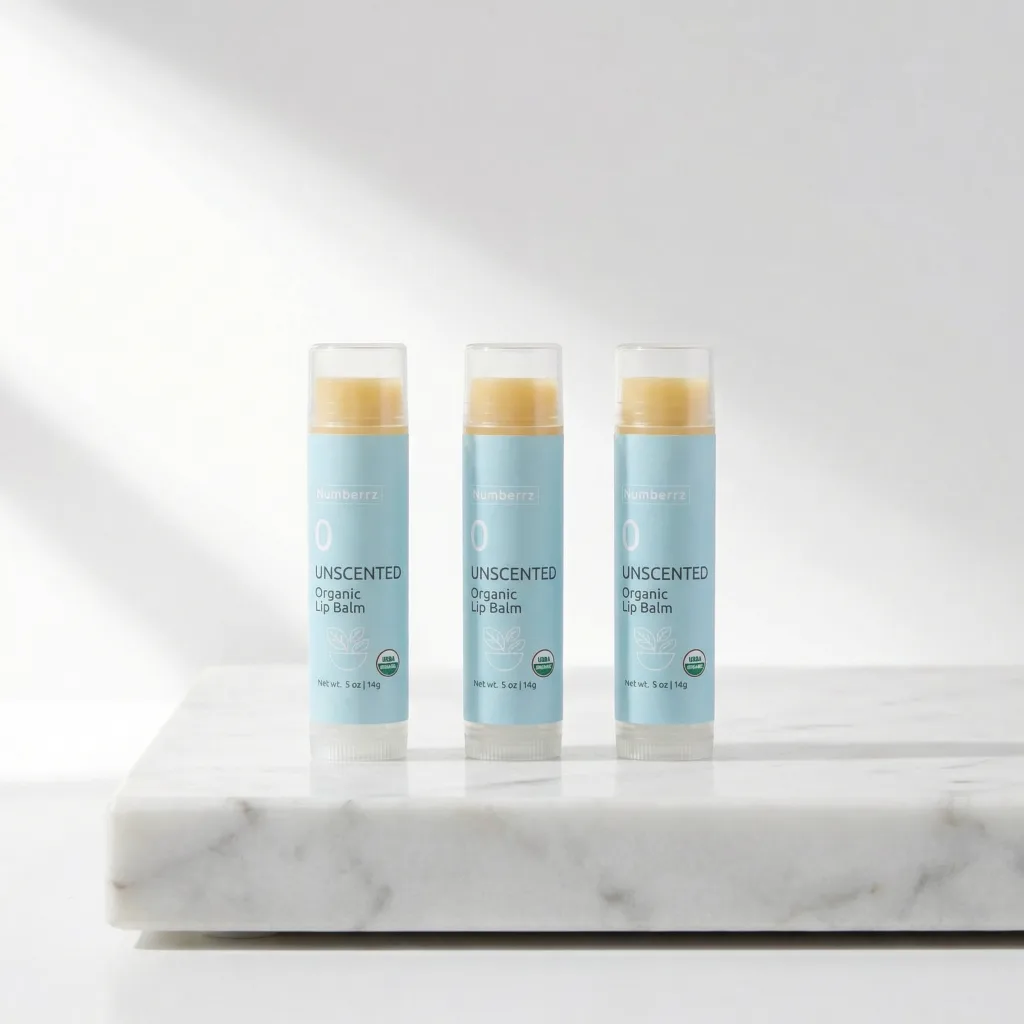
Numbrrrz lip balm scores 10/10 with only four organic, food-grade ingredients.